Jet Stream Mixer Material Kental Tanpa Pemanasan
viscous material mixer, industrial mixing equipment, mixing without heating, high-viscosity liquid mixer, industrial mixer Indonesia, custom industrial mixer, liquid mixing equipment.
Jet Stream Mixer for Mixing Viscous Materials Without Heating
Mixing viscous materials is a common challenge in manufacturing industries. Materials such as syrups, sugar solutions, liquid chemicals, certain resins, adhesives, and other industrial formulations require an appropriate mixing system to achieve effective and consistent blending.
In some applications, heating is used to reduce viscosity and make materials easier to mix. However, heating also requires additional energy, supporting equipment, and temperature control during production.
One alternative worth evaluating is the use of a Jet Stream Mixer. With an appropriate design, this type of mixer can help generate material circulation to support mixing or dilution without additional heating in certain applications.
PT Rho Sigma Trijaya (RST) provides industrial mixing equipment solutions tailored to manufacturing process requirements. This article explains what a Jet Stream Mixer is, how it works, its potential applications for viscous materials, and the engineering factors to consider when selecting a mixing system.
1. What Is a Jet Stream Mixer?
A Jet Stream Mixer is an industrial mixing device designed to generate directed fluid flow to support material circulation and mixing inside a tank or vessel.
Mixing performance is not determined by motor speed alone. The flow pattern generated by the impeller, material characteristics, vessel dimensions, and mixer installation position also influence the final result.
A Jet Stream Mixer can be evaluated for applications that require continuous material movement, distribution of added ingredients, and mixing of liquids with suitable flow characteristics.
Potential applications include:
Improving material circulation inside a tank.
Blending two or more liquid components.
Supporting dilution with water or another compatible liquid.
Reducing poorly circulated regions inside a vessel.
Supporting homogenization in suitable applications.
The mixer configuration must be selected according to the process requirements. Not all viscous materials behave in the same way, and a single mixer design may not be suitable for every application.
2. Why Do Viscous Materials Require the Right Mixing System?
Viscosity is one of the most important parameters when selecting industrial mixing equipment. As a material becomes more resistant to flow, greater attention must be given to impeller design, motor power, and torque requirements.
Viscous materials can present several challenges during production.
Limited Material Circulation
Material may move effectively around the impeller while other areas of the tank experience insufficient movement. This can result in inconsistent mixing.
Higher Torque Requirements
The motor, gearbox, shaft, and mechanical components must withstand the operating load. Startup conditions are particularly important because the initial material may be more viscous than the diluted mixture.
Longer Mixing Time
When circulation is inefficient, the process may require more time to achieve the desired level of homogeneity.
Heating Requirements
In certain applications, heating is used to reduce viscosity. However, if the material can be processed effectively at its operating temperature without additional heating, overall process energy consumption may be reduced.
Mixer selection should therefore consider actual viscosity, temperature, flow characteristics, working volume, and the intended mixing objective.
3. How Does a Jet Stream Mixer Work?
A Jet Stream Mixer uses mechanical energy from a motor to generate fluid movement through its impeller system and flow configuration.
When properly designed, the resulting flow helps move material from one area to another, supporting more uniform distribution of added ingredients throughout the vessel.
Several factors influence mixer performance.
Impeller Design
Impeller geometry, diameter, and blade angle affect flow characteristics and the mixer's ability to move material.
Rotational Speed (RPM)
RPM influences the flow pattern, power consumption, and mechanical load. Higher rotational speed does not necessarily produce more effective mixing.
Motor Power and Torque
The motor must be suitable for the material characteristics and operating conditions. Torque requirements become particularly important when processing highly viscous materials.
Installation Position
The distance between the impeller and the tank bottom, wall, and liquid surface affects circulation patterns.
Vessel Geometry
Tank diameter, height, bottom shape, and working volume also influence mixing performance.
These parameters must be evaluated together to ensure that the mixer can consistently achieve the intended process objectives.
4. Can a Jet Stream Mixer Mix Viscous Materials Without Heating?
In certain applications, a Jet Stream Mixer can support mixing or dilution without additional heating.
This approach may be suitable when the objective is to blend materials or reduce concentration by adding another liquid, rather than performing a process that specifically requires an elevated temperature.
For example, a viscous liquid may be diluted by adding water or another compatible liquid. As the mixture concentration changes, its viscosity may also change, depending on the material's properties.
If the material can circulate and mix effectively at the operating temperature, the process may be carried out without additional heating.
Potential benefits include:
Reducing the energy required for heating.
Simplifying equipment configuration when a heating system is unnecessary.
Reducing the need for additional temperature control.
Supporting dilution at a suitable operating temperature.
Creating opportunities to optimize production costs and processing time.
However, not all viscous materials can be mixed without heating. Some materials require a specific temperature to achieve the necessary viscosity, solubility, or product quality.
The feasibility of a heating-free process must therefore be determined through engineering evaluation and, when necessary, testing with the actual material.
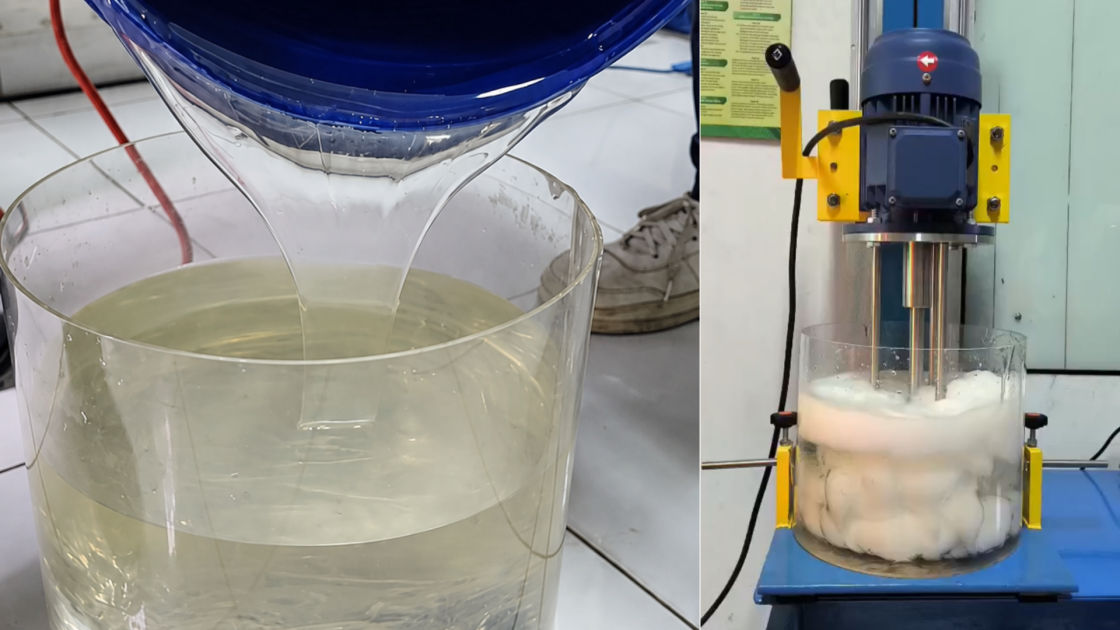
RST Jet Stream Mixer Demonstration: Glucose at 85° Brix Without Heating
RST has demonstrated the use of its Jet Stream Mixer for mixing glucose syrup at 85° Brix without additional heating.
Watch the demonstration video:
https://www.youtube.com/watch?v=XcbYb2uCndc
The demonstration provides a practical reference for evaluating this approach. Actual performance in other applications will depend on material properties, operating conditions, mixer configuration, and the required final product specifications.
5. Types of Viscous Materials That Can Be Evaluated
The suitability of a Jet Stream Mixer depends on material characteristics and equipment design. The following industrial material groups may be evaluated for mixing applications without additional heating.
Syrups and Sugar Solutions
Glucose syrup, sugar syrup, and certain sugar solutions may require effective circulation, particularly when the process involves dilution or blending with other liquid ingredients.
Initial viscosity, operating temperature, target concentration, and the method of water addition must be considered.
Liquid Chemicals
Some liquid chemicals have relatively high viscosity and require mixing to support ingredient distribution.
Mixer selection must account for material compatibility, corrosion resistance, potential chemical reactions, and process safety requirements.
Resins and Polymer Formulations
Certain resins require blending or dilution before they can be used in subsequent manufacturing operations.
The suitability of a Jet Stream Mixer depends on viscosity, flow behavior, temperature sensitivity, and whether the material undergoes curing or chemical reactions during processing.
Adhesives and Bonding Materials
Adhesives cover a wide range of viscosities. Some formulations flow relatively easily, while others require high torque and specialized mixing systems.
For highly viscous or non-Newtonian adhesives, the mixer design must be evaluated carefully.
Liquid Materials for the Paint and Ink Industry
A Jet Stream Mixer may be considered for blending and circulation of certain liquid components.
However, pigment dispersion processes that require high shear may need a High-Speed Disperser or another suitable mixing technology.
Liquid Materials for the Building Materials Industry
Certain binders, additives, and construction chemical formulations may require mixing or dilution before use.
Mixer selection should consider viscosity, potential sedimentation, material compatibility, and the required level of homogeneity.
These examples represent applications for evaluation, not a guarantee that every material in each category is suitable for a Jet Stream Mixer.
6. Engineering Factors When Selecting a Jet Stream Mixer
Before determining the mixer specifications, several technical details should be collected to ensure that the design matches the process requirements.
Material Data
Material type and composition.
Viscosity at the operating temperature.
Material density.
Temperature sensitivity.
Initial and target concentrations.
Corrosive or reactive properties.
Tank or Vessel Data
Total volume and working volume.
Tank diameter and height.
Tank bottom configuration.
Mixer installation position.
Opening dimensions and installation constraints.
Operating Data
Mixing objective.
Target mixing time.
Ingredient addition method.
Operating temperature.
Required homogeneity.
Batch quantity and operating frequency.
Mechanical and Electrical Data
Motor power.
Required torque.
Rotational speed (RPM).
Gearbox type.
Shaft diameter and strength.
Seal type.
Construction materials and control system.
These details help determine the appropriate mixer configuration and identify whether a specialized design is required for highly viscous materials.
7. How to Measure Mixing Efficiency Without Heating
Mixing without heating does not automatically mean lower energy consumption. Efficiency should be evaluated by comparing total energy use, mixing time, and final product quality.
Electrical energy consumption can be estimated using the following formula:
Energy (kWh) = Actual Power (kW) × Operating Time (hours)
When comparing two processes, record:
Mixer energy consumption.
Heating energy consumption, if applicable.
Total mixing time.
Operating temperature.
Final concentration or homogeneity measurements.
Compliance with product specifications.
If the process without heating requires significantly longer mixing time or a higher motor load, the potential energy savings must be reassessed using actual operating data.
This approach allows manufacturers to determine whether a different mixing method provides measurable operational benefits.
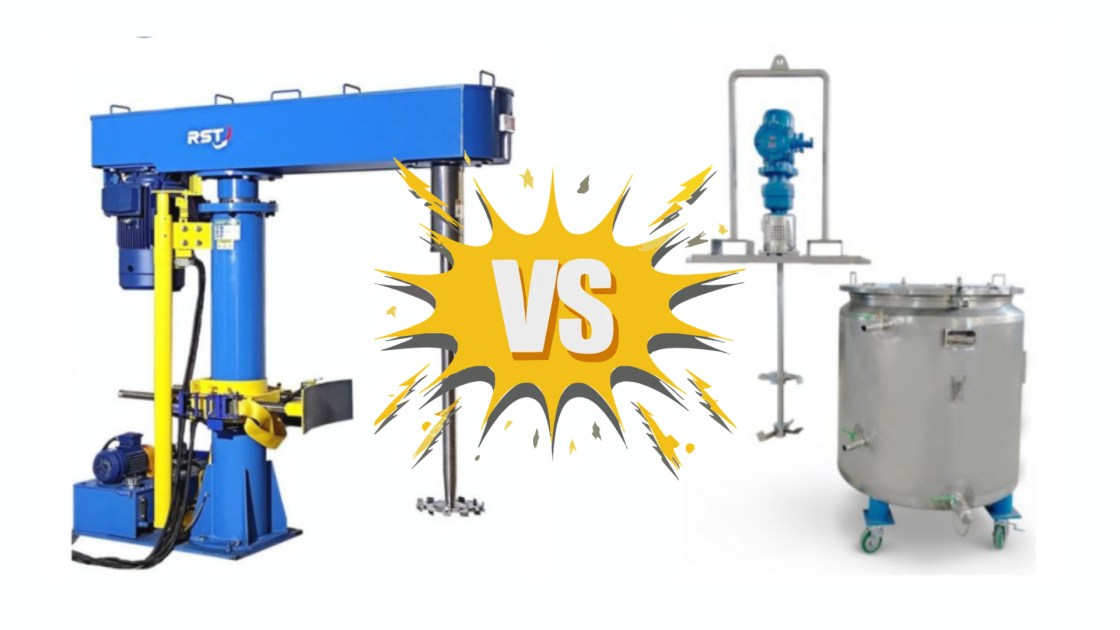
8. Jet Stream Mixer vs. Other Industrial Mixers
Different mixer types have different operating characteristics and applications.
Jet Stream Mixer
Can be evaluated for circulation, directed flow, blending, and dilution of materials compatible with its design.
Propeller Mixer
Commonly used for circulation and blending of relatively free-flowing liquids.
High-Speed Disperser
Used when high shear is required to help wet and disperse particles, such as pigments in paint formulations.
Anchor Mixer
May be suitable for higher-viscosity materials, particularly when material movement near the tank wall is required.
Ribbon Mixer
Generally used for blending powders and granular materials in a suitable vessel.
Mixer selection should be based on material characteristics, process requirements, desired results, and operating conditions. Comparing equipment solely by RPM or motor power is not sufficient.
9. Custom Jet Stream Mixer Solutions from PT Rho Sigma Trijaya
PT Rho Sigma Trijaya (RST) is an industrial mixing equipment manufacturer providing solutions based on customer process requirements.
Every application has different characteristics. Mixer design should therefore consider the material being processed, working volume, mixing objectives, installation conditions, and operational requirements.
When evaluating a Jet Stream Mixer application, the following factors may be considered:
Material characteristics and viscosity.
Tank or vessel capacity.
Circulation and mixing requirements.
Motor and gearbox selection.
Impeller design and installation position.
Construction materials.
Cleaning and maintenance requirements.
Process safety requirements.
RST can help evaluate application requirements and identify the design parameters that need further development.
For highly viscous materials, application testing is an important step before final equipment specifications are established.
Learn more about the RST Jet Stream Mixer:
https://rhosigmatrijaya.co.id/jet-stream-mixer
Frequently Asked Questions About Jet Stream Mixers
What is the function of a Jet Stream Mixer?
A Jet Stream Mixer supports material mixing and circulation through fluid flow generated by its impeller system. Performance depends on the equipment design and material characteristics.
Is a Jet Stream Mixer suitable for viscous materials?
Its suitability must be evaluated based on viscosity, material flow behavior, torque requirements, impeller design, and vessel volume. Highly viscous materials may require a specialized mixer configuration.
Can viscous materials be mixed without heating?
Some materials can be mixed or diluted without additional heating when their properties and process requirements allow it. Feasibility should be verified through engineering evaluation and application testing.
Can a Jet Stream Mixer reduce production costs?
A Jet Stream Mixer may help optimize a process when the selected configuration is appropriate. Actual energy and cost savings should be assessed using energy consumption, processing time, and product quality data.
How is the motor power for a Jet Stream Mixer determined?
Motor power is determined by material characteristics, torque requirements, RPM, impeller design, and operating conditions. Engineering calculations should be used to establish the appropriate specification.
Does RST provide customized industrial mixers?
PT Rho Sigma Trijaya can evaluate application requirements and develop industrial mixing solutions based on material specifications, capacity, process objectives, and installation conditions.
Conclusion
A Jet Stream Mixer is one option worth evaluating for improving circulation and mixing liquid materials in a range of industrial applications.
Under suitable conditions, a Jet Stream Mixer can support blending or dilution without additional heating. This approach may reduce heating energy requirements when the process does not require an elevated temperature.
However, mixing performance depends on material viscosity, flow behavior, impeller design, torque requirements, tank geometry, and final product quality targets.
Engineering evaluation and application testing provide the basis for determining whether a Jet Stream Mixer is the right solution for a particular manufacturing process.
PT Rho Sigma Trijaya (RST) provides customized industrial mixing equipment solutions for manufacturing applications.
To discuss your requirements for mixing viscous materials, syrups, chemicals, adhesives, or other industrial formulations, contact the RST team.