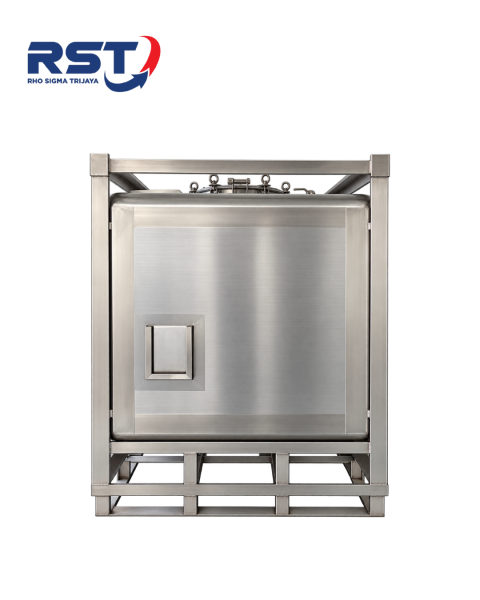
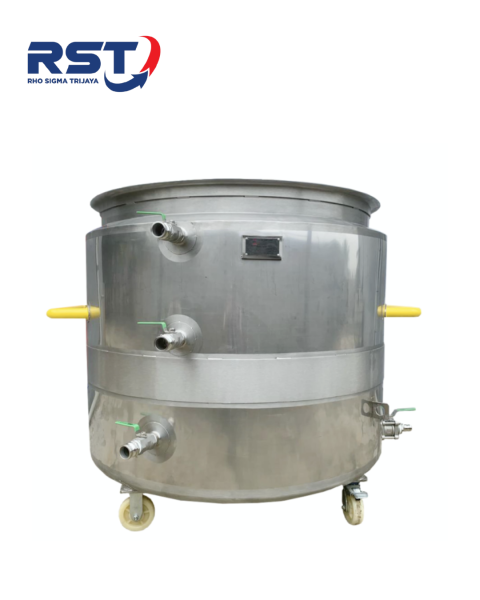
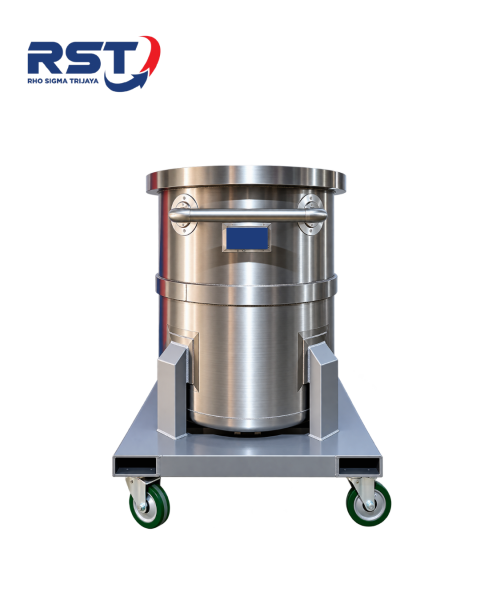
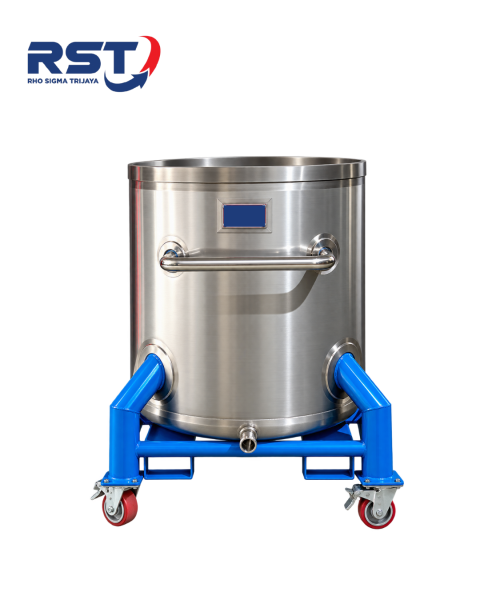
Finishing Tangki Stainless Steel
finishing stainless steel polishing tangki stainless steel mirror finish stainless steel grit amplas stainless steel tangki stainless steel SUS304 tangki mixing stainless steel finishing tangki mixer surface roughness Ra fabrikasi tangki stainless steel tangki mixing industri
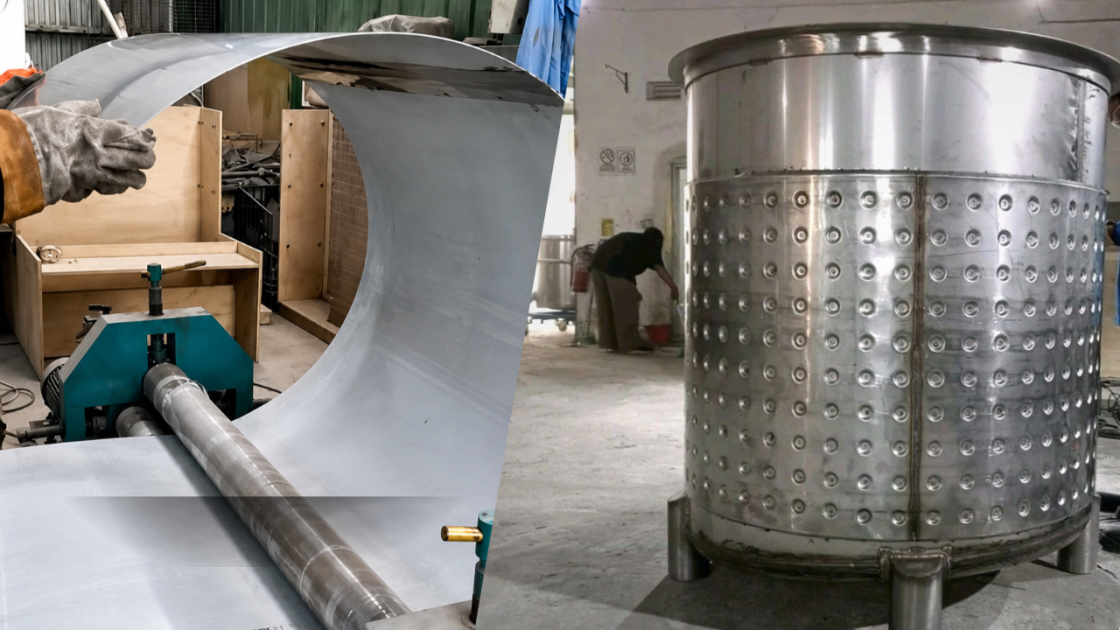
1. Introduction
Stainless steel tank finishing is an important part of industrial tank fabrication. The finishing process affects not only the appearance of the tank but also its cleanability, maintenance requirements, and suitability for specific production processes.
Different industries have different surface finishing requirements. For example, the exterior of a chemical mixing tank may only require a neat brushed finish, while the interior of a paint mixing tank may benefit from a smoother polished surface to help reduce product residue and simplify cleaning.
Common stainless steel finishing options include mill finish, sanded or brushed finish, abrasive grits such as #120, #240, #320, and #400, as well as mirror finish.
Selecting the right finish requires consideration of product characteristics, operating conditions, cleaning procedures, technical specifications, and fabrication costs.
This article explains the main types of stainless steel tank finishing, the differences between abrasive grit levels, industrial applications, and important considerations when ordering a custom stainless steel tank.
2. What Is Stainless Steel Tank Finishing?
Stainless steel tank finishing is the process of treating a stainless steel surface to achieve a specified appearance, texture, and surface condition.
The process may involve abrasive belts, sanding discs, flap wheels, polishing wheels, abrasive pads, and polishing compounds.
Finishing can be applied to several parts of industrial equipment, including:
Tank exterior: To achieve a professional appearance and simplify routine maintenance.
Tank interior: To improve cleanability and meet process-specific surface requirements.
Welded areas: To remove unwanted surface irregularities and improve the finish around weld joints.
Tank components: Including nozzles, manways, flanges, covers, and agitator components.
It is important to understand that surface appearance and corrosion resistance are not the same thing. A mirror finish does not automatically make stainless steel more corrosion-resistant than a properly processed brushed surface.
Corrosion performance also depends on the material grade, weld quality, surface contamination, and post-fabrication treatment.
3. Types of Stainless Steel Tank Finishing
A. Mill Finish
Mill finish refers to the surface condition obtained from the original manufacturing process of stainless steel sheets, plates, or other stainless steel products before additional finishing is applied.
The appearance may range from relatively dull to metallic, depending on the product form and original manufacturing condition.
Characteristics of mill finish:
Does not have a mirror-like reflection.
Retains the original surface characteristics of the supplied material.
Requires little or no additional polishing if the existing surface meets the specified requirements.
Appearance may vary depending on the stainless steel product and manufacturing process.
Typical applications:
Structural components.
Non-decorative tank surfaces.
Industrial equipment that does not require additional surface polishing.
For product-contact surfaces, mill finish should only be used when the surface condition meets the required process and cleaning specifications.
B. Sanded Finish or Brushed Finish
A sanded finish is produced by mechanically abrading the stainless steel surface. When the resulting lines are relatively uniform and directional, the finish is commonly referred to as a brushed finish.
This is a popular option for industrial tank exteriors because it provides a neat appearance without the strong reflections associated with mirror polishing.
Characteristics of brushed finish:
Visible sanding lines.
A relatively uniform appearance when properly processed.
Minor scratches may be less noticeable than on highly reflective surfaces.
Final smoothness depends on abrasive selection and finishing technique.
Typical applications:
Paint mixing tank exteriors.
Chemical storage and mixing tanks.
Ribbon mixers and paste mixers.
Stainless steel machine covers and panels.
Brushed finish can be suitable for many industrial applications. However, its suitability for tank interiors depends on the product, cleaning requirements, and specified surface roughness.
C. Grit #120 Finish
Grit #120 is a relatively coarse abrasive compared with #240, #320, or #400 abrasives within a comparable grit system.
It is commonly used for preliminary sanding, removing certain fabrication marks, or preparing a surface for subsequent finishing.
Characteristics of grit #120:
Relatively visible sanding marks.
Suitable for initial surface preparation.
May leave a coarser texture than higher-grit abrasives.
Typical applications:
Preliminary sanding.
Surface preparation before finer polishing.
Selected exterior surfaces where a coarse finish is acceptable.
Grit #120 is not automatically suitable for product-contact surfaces that require hygienic or highly cleanable conditions.
D. Grit #240 Finish
Grit #240 generally produces a finer surface than grit #120 when comparable abrasive systems and finishing methods are used.
It offers a practical balance between appearance, fabrication time, and cost.
Characteristics of grit #240:
Moderately fine sanding lines.
Suitable for a uniform brushed appearance.
Can be used as a final finish or as an intermediate polishing stage.
Typical applications:
Industrial paint mixing tank exteriors.
Chemical mixing equipment.
General-purpose stainless steel tanks.
Machine covers and fabricated components.
For many industrial tank exteriors, grit #240 provides a neat, professional finish without the additional cost of mirror polishing.
E. Grit #320 Finish
Grit #320 generally produces finer sanding marks than grit #240.
It is often selected when a smoother, more refined brushed appearance is desired.
Characteristics of grit #320:
Finer visible sanding patterns.
A relatively smooth appearance.
Can be used as a final brushed finish or as preparation for further polishing.
Typical applications:
Premium industrial tank exteriors.
Stainless steel covers and panels.
Components requiring a finer visual finish.
For hygienic applications, grit #320 alone does not establish compliance with a particular surface roughness or sanitation requirement.
F. Grit #400 Finish
Grit #400 generally produces a finer surface texture than grit #240 or #320 when comparable abrasive systems are used.
It can serve as a final brushed finish or as a preparation stage before additional polishing.
Characteristics of grit #400:
Fine sanding patterns.
A smooth and refined appearance.
Suitable for applications requiring a finer surface finish.
Typical applications:
High-quality stainless steel tank exteriors.
Stainless steel components with higher appearance requirements.
Surface preparation before polishing.
A grit #400 finish should not be assumed to meet a specific Ra value without appropriate measurement.
G. Mirror Finish
Mirror finish is produced by polishing stainless steel until it develops a highly reflective, mirror-like appearance.
The process typically involves multiple stages of surface preparation, progressively finer abrasives, and polishing compounds.
Characteristics of mirror finish:
High surface reflectivity.
Reduced visible sanding marks when properly processed.
Requires more labor and finishing time.
Fingerprints, stains, and new scratches can be highly visible.
Typical applications:
Premium stainless steel tank exteriors.
Decorative stainless steel components.
Selected product-contact surfaces.
Industrial processes where polished surfaces are specified for cleanability or other functional requirements.
Mirror finish is not simply about making stainless steel shiny. For product-contact applications, surface roughness, weld quality, surface condition, and cleaning requirements must also be considered.
4. Comparison of Stainless Steel Tank Finishes
| Finish type | General appearance | Main purpose | Typical application |
|---|---|---|---|
| Mill finish | Original metallic surface | Basic surface condition | Structural and selected industrial components |
| Grit #120 | Relatively coarse sanding marks | Initial sanding and preparation | Preliminary finishing |
| Grit #240 | Moderate brushed texture | Practical industrial finish | General tank exteriors |
| Grit #320 | Finer brushed texture | Improved visual appearance | Refined tank exteriors |
| Grit #400 | Fine surface texture | Finer finish or polishing preparation | Higher-quality surface appearance |
| Mirror finish | Highly reflective | Premium appearance and polished surface | Selected industrial and product-contact applications |
These descriptions are general guidelines. Actual results depend on the original material, abrasive system, finishing technique, and agreed acceptance criteria.
5. Why Is Surface Roughness (Ra) Important?
Abrasive grit numbers are commonly used to describe finishing methods. However, when a measurable technical requirement is needed, surface roughness is often specified using parameters such as Ra.
Ra, or arithmetic average roughness, measures the average absolute deviation of a surface profile from its mean line over a defined evaluation length. It is typically expressed in micrometers (µm).
A lower Ra value generally indicates a smoother measured surface profile. However, two surfaces with the same Ra value may still have different scratch patterns, surface features, and cleanability characteristics.
Therefore, grit #240, #320, or #400 cannot be directly converted into a guaranteed Ra value without relevant process data and measurement.
When surface roughness is important, the specification should define:
Maximum allowable Ra value, if applicable.
Measurement locations, including the tank interior or exterior.
Measurement method and appropriate instrument.
Requirements for welds and product-contact areas.
Inspection and acceptance criteria.
A suitable surface roughness tester or profilometer can be used to verify compliance with the specified requirements.
6. Tank Interior vs. Tank Exterior Finishing
The interior and exterior of a stainless steel tank serve different purposes and may require different finishes.
Exterior Finishing
The exterior finish is usually selected based on:
Visual appearance.
Ease of removing fingerprints and stains.
Working environment.
Maintenance requirements.
Fabrication cost.
For many industrial tanks, a brushed finish using an appropriate abrasive grit provides a clean, professional appearance. Mirror finish may be selected when a premium reflective appearance is required.
Interior Finishing
The interior finish should be selected based on:
Type of product being processed.
Product adhesion and residue characteristics.
Cleaning and rinsing requirements.
Hygienic or sanitary requirements.
Weld quality and potential residue-trapping areas.
Required surface roughness, if specified.
For food, beverage, cosmetic, and pharmaceutical applications, the finish must be evaluated against the relevant process and hygiene requirements. Surface smoothness is important, but it is only one part of hygienic equipment design.
7. Recommended Finishing for Paint Mixing Tanks
In paint manufacturing, the interior surface finish of a mixing tank can influence product residue, cleaning time, and the risk of color contamination between production batches.
Paint formulations may contain resins, pigments, binders, solvents, and other additives. Depending on the formulation and viscosity, paint can leave a film or residue on the tank wall after mixing and discharge.
For applications where easy cleaning and reduced residue are important, a polished or mirror-finished interior surface is worth considering.
How Can Mirror Finish Help in Paint Mixing?
A properly polished surface can reduce surface irregularities where residues may accumulate and may make the tank easier to clean than a surface with coarse or inconsistent sanding marks.
Potential benefits include:
Reduced residue retention: A smoother surface can reduce locations where paint residue becomes trapped.
Improved cleanability: Remaining paint may be easier to remove using an appropriate cleaning procedure.
Reduced risk of color carryover: Particularly relevant when the same tank is used for different paint colors.
Potential reduction in product loss: Less residual product may remain after discharge when the tank design and operating procedure also support effective emptying.
More consistent internal surface: Proper polishing can improve the uniformity of the finished surface.
Does Mirror Finish Prevent Paint from Sticking to the Tank Wall?
No. Mirror finish does not make stainless steel completely non-stick.
Paint adhesion depends on formulation, resin chemistry, pigments, viscosity, drying behavior, contact time, and the cleaning method. Paint that dries or forms a film can remain difficult to remove even from a highly polished surface.
To reduce paint residue, mirror finish should be considered together with the following factors:
Surface polishing quality: The surface should be uniform and free from unnecessary coarse grooves.
Weld finishing: Internal weld areas should meet the agreed surface and fabrication requirements.
Tank geometry: The bottom shape, corners, nozzles, and drain arrangement should support effective discharge.
Agitator design: The mixing system should be suitable for the paint's viscosity and flow behavior.
Cleaning procedure: The cleaning method and cleaning agents should be compatible with the paint formulation and tank material.
Is Grit #400 Enough, or Is Mirror Finish Better?
The answer depends on the process requirements.
For the tank exterior, grit #240, #320, or #400 may provide a suitable brushed finish. For the tank interior, especially where frequent color changes and cleaning are required, a polished finish may be worth evaluating.
However, grit #400 does not automatically guarantee a particular surface roughness, and mirror finish does not automatically guarantee compliance with a specified Ra value.
If cleanability is a major concern, the customer and manufacturer should agree on the surface finish, required Ra value where applicable, and a practical cleaning validation method.
Recommendation for paint mixing tanks: Consider a polished or mirror-finished interior when the priority is to improve cleanability and reduce residual paint. The final selection should be validated using the actual paint formulation and cleaning procedure.
8. Recommended Finishing for Other Industries
Chemical Industry
For chemical mixing tanks, the finish should be selected according to chemical compatibility, corrosion considerations, cleaning requirements, and the type of product processed.
A brushed exterior may be sufficient for general industrial service. The interior surface should be specified according to the process rather than appearance alone.
Food and Beverage Industry
Food-contact surfaces may require specific hygienic design, cleanability, weld quality, and surface roughness requirements.
The appropriate finish should follow applicable food safety standards and the customer's process specification. Mirror finish is not automatically mandatory for every food tank.
Cosmetic Industry
Cosmetic products can vary significantly in viscosity, composition, and cleaning requirements.
A polished interior may be beneficial for selected formulations, particularly where residue removal and product changeover are important.
Pharmaceutical Industry
Pharmaceutical equipment may require tightly controlled surface roughness, documentation, and hygienic design.
The finish should be defined according to the applicable standards and the customer's User Requirement Specification (URS).
General Industrial Storage
For tanks used for general storage, mill finish or brushed finish may be appropriate if the surface condition, material compatibility, and operating environment meet the required specifications.
9. Important Considerations When Ordering a Stainless Steel Tank
Before ordering a custom stainless steel tank, the customer and manufacturer should agree on the following items.
1. Material Grade
Specify the required stainless steel grade, such as SUS304 or SUS316L, based on the product and operating environment.
2. Finishing Location
Define whether the finish applies to the tank interior, exterior, weld areas, nozzles, manways, or the entire tank.
3. Finishing Type
Specify the required finish using clear terminology, such as brushed finish, grit #240, grit #320, grit #400, or mirror finish.
Approved sample panels or visual references can help clarify expectations.
4. Surface Roughness Requirements
Where necessary, specify the maximum Ra value, measurement locations, and inspection method instead of relying only on abrasive grit numbers.
5. Weld Quality
Ensure welds meet the applicable design and fabrication requirements. Grinding and polishing should not reduce the material thickness below the permitted limit.
6. Post-Finishing Treatment
Use tools and consumables suitable for stainless steel. Avoid contamination from iron particles or abrasives previously used on carbon steel.
Where required, use appropriate cleaning, decontamination, and passivation procedures.
7. Inspection and Documentation
Depending on project requirements, inspection may include visual checks, surface roughness measurements, material verification, and finishing records as part of quality control or the Factory Acceptance Test (FAT).
10. Conclusion
Stainless steel tank finishing is an important consideration in industrial equipment design and fabrication. It affects surface appearance, cleanability, maintenance, and suitability for specific production processes.
Mill finish, grit #120, #240, #320, #400, brushed finish, and mirror finish each have different characteristics and applications. No single finish is ideal for every tank.
For general industrial applications, a suitable brushed finish may offer a practical balance between appearance and cost. For paint mixing tanks where color changeover, residue reduction, and cleaning are important, a polished or mirror-finished interior may be worth considering.
The final selection should be based on actual process requirements, product characteristics, surface roughness specifications, cleaning methods, and budget.
11. Custom Stainless Steel Tanks and Mixing Equipment by RST
PT Rho Sigma Trijaya (RST) provides custom industrial mixing equipment and stainless steel tank fabrication solutions for a range of manufacturing industries.
Depending on project requirements, our equipment offerings include:
Stainless Steel Mixing Tanks: Mixing vessels designed for a variety of industrial production processes.
High Speed Disperser (HSD Mixer): For dispersion and mixing processes suited to the material characteristics.
Paste Mixers: For processing paste-like materials.
Ribbon Mixers: For blending powder and granular materials in suitable applications.
Double Jacket Tanks: Tanks with jacket construction for processes requiring temperature control.
Tank design, material selection, mixing systems, and surface finishing can be discussed based on product characteristics, production capacity, operating requirements, and customer specifications.
If you are planning a paint mixing tank, chemical mixing tank, or custom stainless steel mixing system, the RST team can discuss your project requirements.
Website: https://www.rhosigmatrijaya.co.id/
Email: sales1@rhosigmatrijaya.co.id
Contact RST to discuss your stainless steel tank and industrial mixing equipment requirements.
Frequently Asked Questions About Stainless Steel Tank Finishing
1. What is the best finish for a stainless steel tank?
The best finish depends on the tank's intended use. Brushed finish is often sufficient for industrial tank exteriors, while polished or mirror finish may be considered for interiors requiring improved cleanability.
2. What is the difference between grit #240, #320, and #400?
Generally, grit #240 produces a coarser texture than #320, while grit #400 produces a finer texture than both, assuming comparable abrasive systems and finishing methods.
3. Is mirror finish mandatory for food mixing tanks?
Not always. The appropriate finish depends on applicable food safety requirements, hygienic design, cleanability, and process specifications.
4. Does mirror finish prevent paint from sticking to a tank?
No. Mirror finish can reduce surface irregularities that may retain residue, but it does not make stainless steel completely non-stick. Paint formulation, tank design, discharge efficiency, and cleaning procedures also affect residue removal.
5. What is Ra in stainless steel finishing?
Ra is a surface roughness parameter that measures the average deviation of a surface profile from its mean line. It is usually expressed in micrometers (µm) and can be used to verify specified finishing requirements.
6. Does grit #400 correspond to a specific Ra value?
No. Abrasive grit numbers cannot be directly converted into a guaranteed Ra value. The actual result depends on the material, abrasive, finishing technique, and surface condition. Measurement is necessary when a specific Ra value is required.
7. Is SUS304 suitable for chemical mixing tanks?
SUS304 may be suitable for many applications, but compatibility depends on the chemical type, concentration, temperature, and operating conditions. For more corrosive environments, other grades such as SUS316L may need to be evaluated.
8. What should be specified when ordering a custom stainless steel tank?
Specify the capacity, product type, material grade, operating conditions, finishing location, Ra requirements where applicable, mixing requirements, cleaning method, and inspection criteria.
Looking for a custom stainless steel mixing tank? Contact PT Rho Sigma Trijaya to discuss the technical specifications and fabrication requirements for your project.