Spesifikasi High Speed Disperser
High Speed Disperser, spesifikasi HSD Mixer, harga mesin disperser, mesin disperser cat, supplier HSD Mixer, mesin dispersi pigmen, mixer industri kimia, mesin mixing custom, RST

High Speed Disperser Specifications: Data to Prepare Before Requesting a Quotation
1. Introduction
When a company requires equipment for mixing or dispersing chemical materials, a High Speed Disperser (HSD Mixer) is one of the commonly considered solutions.
High Speed Dispersers are widely used in the paint, ink, coating, adhesive, pigment, and chemical industries, particularly in processes that require the effective dispersion of solid particles into liquid media.
Before requesting a quotation from a supplier, the Procurement department typically needs to collect preliminary technical information from the end-user department, such as Engineering, Production, or Process Engineering.
However, not every company has complete technical data available at the initial stage. Parameters such as motor power, dispersing disc diameter, rotational speed, and inverter requirements may not yet be defined because they require technical evaluation by the equipment manufacturer.
So, what information should you prepare before requesting a High Speed Disperser quotation?
This article explains the essential information required for an initial Request for Quotation (RFQ), the technical parameters that can be discussed with the manufacturer, and how Procurement teams can obtain more accurate quotations that are easier to compare across suppliers.
2. What Is a High Speed Disperser?
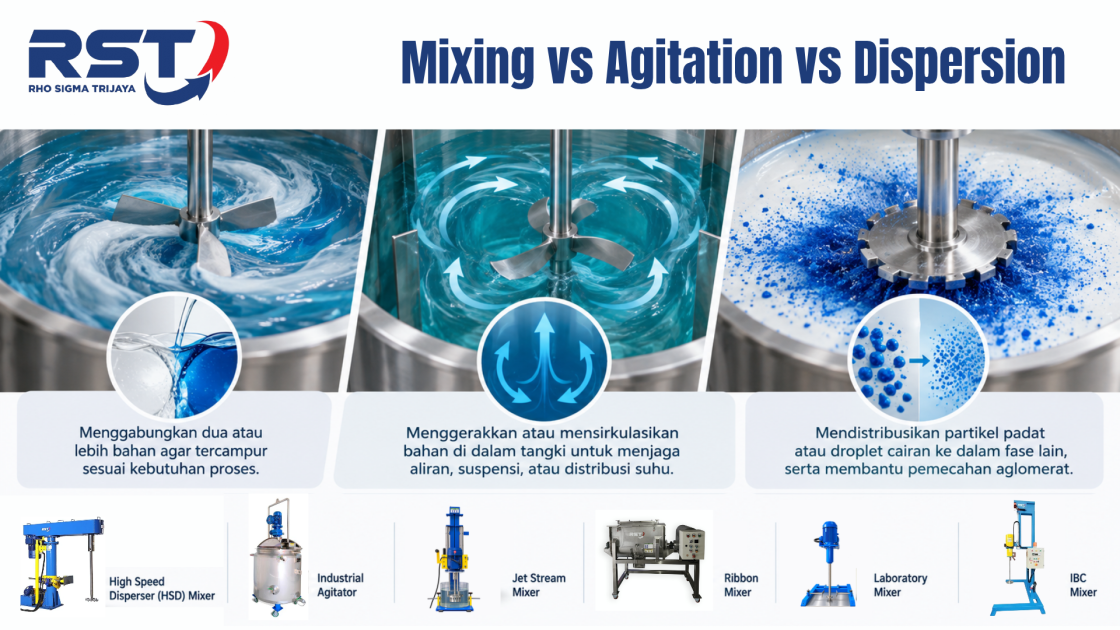
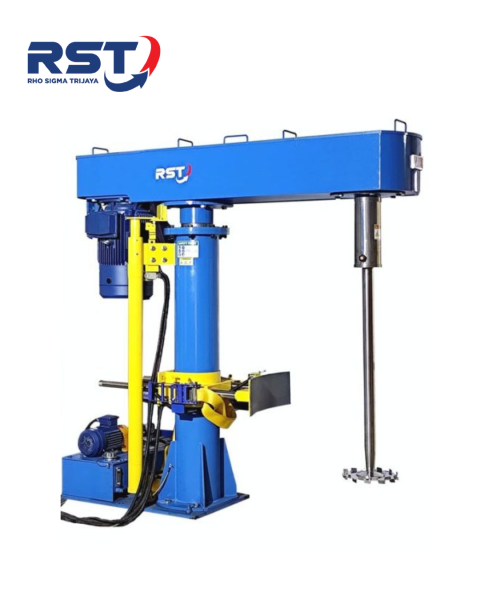
A High Speed Disperser is a mixing machine that uses a toothed impeller, commonly known as a dispersing disc, to generate fluid circulation and shear forces within the material being processed.
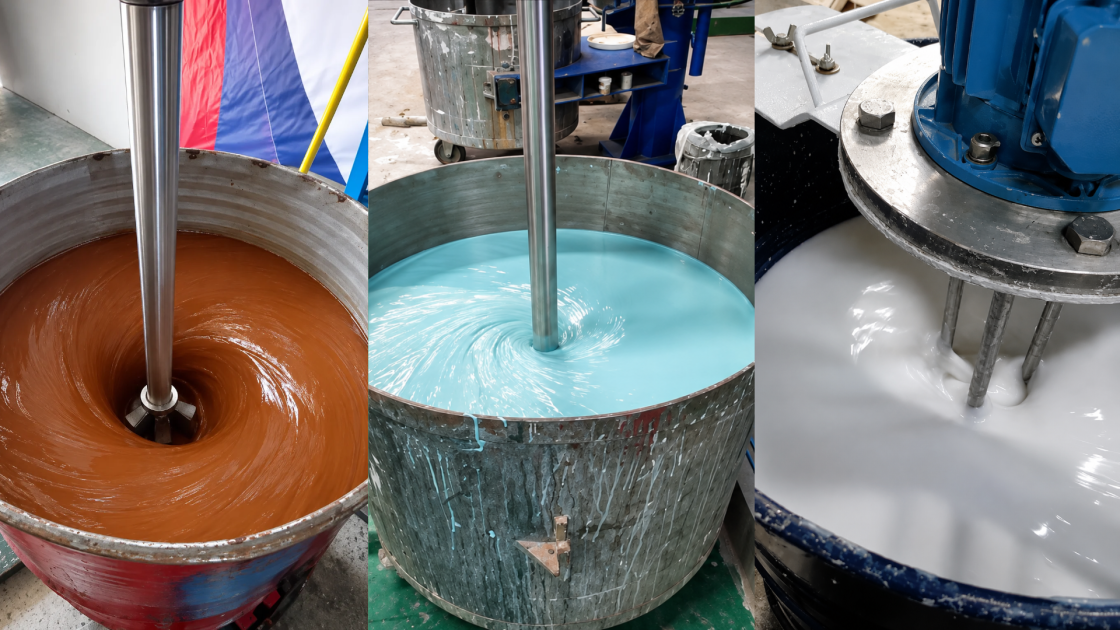
The high-speed rotation of the disc promotes material circulation and helps break down particle agglomerates, improving wetting and dispersion.
High Speed Dispersers are commonly used in applications such as:
Paint and coating manufacturing.
Pigment and colorant dispersion.
Printing ink production.
Chemical mixing and formulation.
Certain adhesive and sealant manufacturing processes.
Various liquid-based formulation processes.
Selecting an HSD based solely on motor power in kW or HP is not sufficient. The machine must be matched to the material characteristics, working volume, viscosity, process objectives, and tank configuration.
3. What Information Should You Prepare Before Requesting an HSD Mixer Quotation?
To simplify the RFQ process, the required information can be divided into two categories: essential information that should be prepared from the beginning and technical parameters that can be discussed with the manufacturer.
A. Type of Material to Be Processed
The first piece of information is the type of material or product to be processed.
Examples include:
Water-based paint.
Solvent-based paint.
Pigment dispersions.
Printing inks.
Chemical coatings.
Adhesives and other chemical formulations.
The material type helps the manufacturer understand the process characteristics, potential chemical compatibility requirements, and the appropriate mixing configuration.
Where possible, provide information about the main ingredients, density, abrasive characteristics, and whether the material contains solid particles.
For confidential formulations, Procurement can provide a general application description and relevant material properties without disclosing the complete formulation.
B. Batch Capacity or Working Volume
Capacity is one of the most important parameters when selecting a High Speed Disperser.
Procurement should distinguish between the following terms:
Working volume: The actual volume of material processed in one batch.
Tank geometric volume: The total internal volume of the tank.
Production capacity: The quantity of finished product produced over a specific period, such as liters per hour or tons per day.
These three values are not necessarily the same.
For example, a company may require an HSD to process 500 liters of paint per batch. The manufacturer must determine the appropriate tank geometric volume, taking into account the required headspace, material characteristics, and circulation pattern during mixing.
Therefore, when specifying tank capacity, always clarify whether the stated value refers to working volume or total geometric volume.
C. Material Viscosity
Viscosity describes the resistance of a material to flow and can influence power requirements, material circulation, and dispersion performance.
If available, provide the following information:
Viscosity value in cP or mPa·s.
Temperature at which the viscosity was measured.
Measurement method or instrument used.
Whether the viscosity changes during processing.
Material condition at the beginning and end of the process.
For example, a material may have a viscosity of 2,000 cP at room temperature. This information becomes more useful when accompanied by the measurement temperature and the material's condition during testing.
For non-Newtonian materials, such as certain paints and adhesives, viscosity may change with shear rate. Consequently, a single viscosity value may not be sufficient to determine the appropriate machine design.
If viscosity data are unavailable, Procurement can consult the Production or Process Engineering team to obtain an initial estimate of the material's flow characteristics.
D. Process Objectives and Desired Results
The manufacturer needs to understand what the customer expects to achieve through the dispersion process.
Typical objectives include:
Wetting and dispersing pigments.
Reducing particle agglomeration.
Achieving a specified fineness level.
Obtaining uniform color distribution.
Meeting a target processing time.
Maintaining product stability.
This information is important because two materials with the same volume and viscosity may still require different HSD configurations.
If the process has a target particle size, fineness level, or other quality parameter, include the required value and the relevant test method, where available.
E. Tank Type and Dimensions
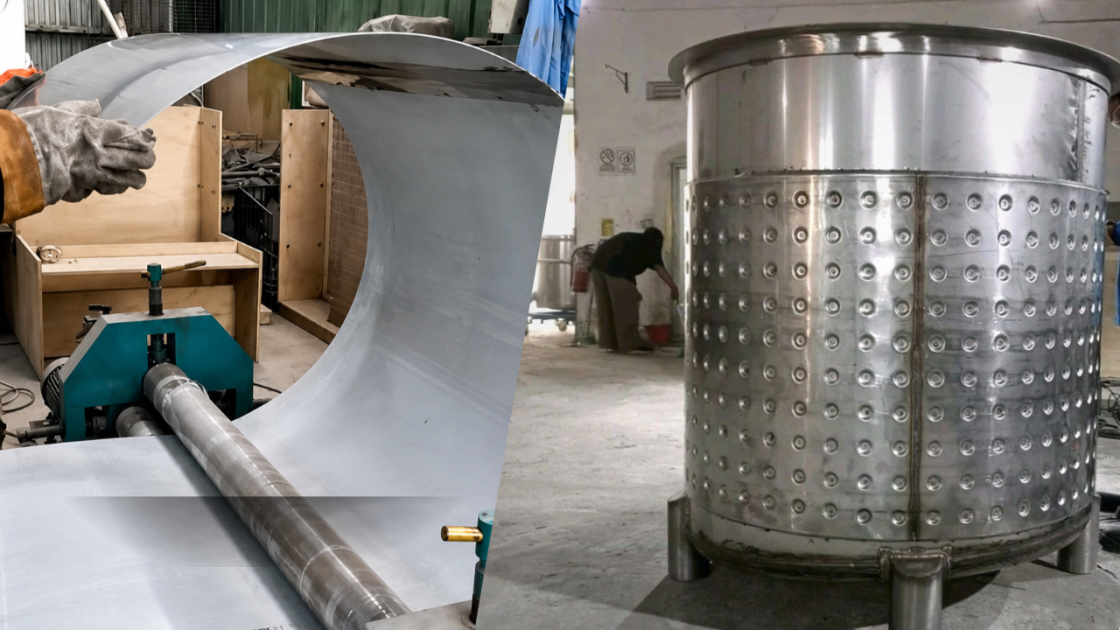
Specify whether the HSD will operate with an existing tank or require a new tank supplied with the machine.
If an existing tank will be used, the following information should be prepared:
Internal tank diameter.
Tank height.
Working volume.
Tank bottom configuration.
Construction material.
Dimensions and positions of openings.
Machine installation conditions.
If available, provide photographs, technical drawings, or a layout of the installation area.
This information helps the manufacturer evaluate the dispersing disc diameter, disc operating position, required clearances, and compatibility between the machine and the tank.
If a tank has not yet been selected, Procurement can initially provide the target working volume and process requirements.
F. Motor Power and Drive System Requirements
HSD motor power is generally specified in kW or HP.
However, Procurement does not need to determine the motor rating independently before consulting the manufacturer. Motor selection should consider batch volume, viscosity, material characteristics, disc diameter, rotational speed, and process objectives.
The following information should be provided where available:
Whether the motor will be supplied by the equipment manufacturer.
Available electrical power supply at the installation site.
Electrical voltage and frequency.
Requirement for variable-speed operation.
Requirement for an inverter or Variable Frequency Drive (VFD).
Whether a lifting system is required to raise and lower the dispersing disc.
For example, if the factory electrical supply is 380–400 V, three-phase, 50 Hz, this information can be included for design confirmation. The final electrical specification must be based on the actual site conditions.
G. Rotational Speed and Dispersing Disc Requirements
A High Speed Disperser uses a dispersing disc to generate shear forces and promote material circulation.
Rotational speed, disc diameter, and disc position relative to the tank must be selected according to the process requirements.
If these parameters have already been established by the Engineering team, Procurement can provide:
Required rotational speed range.
Preferred dispersing disc diameter.
Number of dispersing discs.
Tank size limitations.
Variable-speed control requirements.
If these parameters are not yet known, the manufacturer can recommend a suitable configuration based on the material properties, working volume, and dispersion objectives.
Disc diameter and rotational speed should not be selected based solely on motor power. An unsuitable configuration may result in ineffective circulation, excessive vortex formation, or dispersion results that fail to meet the required specifications.
H. Safety Requirements and Operating Environment
For industrial applications, Procurement should also identify the installation environment and applicable safety requirements.
Relevant information includes:
Whether the material contains flammable solvents.
Whether the installation area is classified as a hazardous area.
Grounding and bonding requirements.
Emergency stop and moving-part guarding requirements.
Lifting system safety and position-locking requirements.
Internal company safety standards.
Special inspection or certification requirements.
For example, when processing solvent-based paint, the hazardous-area classification and the suitability of the motor, electrical equipment, and instrumentation must be evaluated based on actual operating conditions and applicable standards.
A standard motor and a conventional inverter should not automatically be assumed suitable for hazardous-area applications.
4. Mandatory RFQ Data vs. Parameters That Can Be Discussed with the Manufacturer
Not every technical specification needs to be finalized when Procurement submits an initial RFQ.
| Information | Priority | If the Information Is Not Available |
|---|---|---|
| Material type | Essential | Provide a general application description |
| Working volume per batch | Essential | State the target batch capacity |
| Viscosity | Important | Provide an estimate or available product data |
| Process objectives | Essential | Explain the desired results |
| Tank dimensions | Required for an existing tank | Provide approximate dimensions or photographs |
| Motor power | Can be determined through technical consultation | Request the manufacturer's recommendation |
| Dispersing disc diameter | Can be determined through technical consultation | Request the manufacturer's recommendation |
| Rotational speed | Can be determined through technical consultation | Describe the process requirements |
| Electrical supply | Important | Confirm with Engineering or Maintenance |
| Safety requirements | Important | Confirm with EHS and Engineering |
| Required delivery date | Essential for quotation planning | Provide the expected schedule |
| Installation location | Essential for project evaluation | Specify the factory location |
This approach allows Procurement to initiate the RFQ process without waiting for every engineering detail to be finalized, provided that sufficient preliminary information is available to assess the application and project requirements.
5. Example of Initial High Speed Disperser RFQ Specifications
The following example illustrates the preliminary information that Procurement can send to an equipment supplier.
Initial application requirements:
Equipment: High Speed Disperser.
Application: Water-based paint manufacturing.
Working volume: 500 liters per batch.
Material: Paint formulation containing pigments and resin.
Viscosity: Not yet determined; to be confirmed by Process Engineering.
Tank: New tank required.
Motor power: Supplier to recommend based on the application.
Speed control: Variable-speed operation using an inverter.
Electrical supply: To be confirmed according to the factory's electrical specifications.
Lifting system: Supplier to recommend a suitable configuration.
Installation location: Customer's factory.
Quantity: 1 unit.
Required delivery: Supplier to specify the estimated lead time.
Additional requirements: Please include the technical specifications, scope of supply, and commercial quotation.
This example represents preliminary RFQ information, not a finalized manufacturing specification.
The manufacturer will still need to clarify the technical requirements before confirming the motor rating, disc diameter, operating speed, tank dimensions, and final machine configuration.
6. Why Are Initial Specifications Important for Procurement?
Clear specifications help Procurement compare supplier quotations more fairly and reduce the risk of scope changes after the quotation has been issued.
Without sufficient information, two suppliers may offer machines with the same motor power but different working volumes, lifting systems, tank configurations, inverter specifications, construction materials, and safety features.
As a result, the lower-priced quotation may not provide an equivalent scope of supply or process capability.
When comparing High Speed Disperser quotations, Procurement should evaluate the following:
Machine working capacity and intended application.
Motor power and rotational speed range.
Dispersing disc diameter and mixing configuration.
Tank and product-contact material specifications.
Lifting system and frame construction.
Inverter, electrical control panel, and safety features.
Scope of supply and excluded items.
Lead time, warranty, installation, and after-sales service.
If the technical specifications are not yet finalized, ask each supplier to clearly state the technical assumptions used in their quotation. This makes the comparison more transparent and helps identify differences in the proposed solutions.
7. Common Mistakes to Avoid When Requesting an HSD Quotation
Several common mistakes can affect the accuracy and comparability of High Speed Disperser quotations.
Specifying only motor power. Motor power alone cannot establish whether the machine is suitable for the intended process.
Confusing working volume with tank geometric volume. This can lead to different expectations regarding the actual processing capacity.
Providing insufficient information about viscosity or material characteristics. The supplier may make assumptions that do not reflect the actual operating conditions.
Failing to define the dispersion objectives. Simply mixing ingredients is different from dispersing pigments to achieve a specified fineness level.
Overlooking safety requirements. Applications involving flammable solvents require an appropriate evaluation of the installation area and electrical components.
Failing to review the scope of supply. Supplier quotations cannot be compared directly if the included equipment and services are different.
Avoiding these mistakes helps Procurement obtain more reliable quotations and supports better technical and commercial decision-making.
8. How PT Rho Sigma Trijaya Supports the HSD RFQ Process
PT Rho Sigma Trijaya (RST) provides custom industrial mixing equipment for various industrial applications, including dispersion processes in the paint, ink, coating, and chemical industries.
At the initial RFQ stage, customers do not necessarily need to have every machine design detail finalized.
RST can begin evaluating the application based on available information, including material type, batch capacity, viscosity, process objectives, tank conditions, and operational requirements.
Based on these initial details, the technical requirements can be reviewed to determine a suitable High Speed Disperser configuration, including motor power recommendations, dispersing disc selection, speed control requirements, and tank configuration.
To accelerate the quotation process, Procurement teams are encouraged to prepare the available preliminary data before submitting an RFQ.
If certain parameters are not yet known, they can be marked as To Be Confirmed (TBC) and clarified during the technical discussion with the supplier.
9. High Speed Disperser RFQ Checklist
Before sending an RFQ to a supplier, use the following checklist to ensure that the essential information has been considered.
Type of product or material to be processed.
Required working volume per batch.
Material viscosity or estimated consistency.
Target process results or dispersion requirements.
Existing tank or new tank requirement.
Tank dimensions, if available.
Factory electrical supply.
Inverter and variable-speed control requirements.
Lifting system requirements.
Safety requirements and operating environment.
Required quantity and installation location.
Target delivery date.
Available photographs, technical drawings, or existing equipment specifications.
If not every item is available, an initial RFQ can still be submitted by clearly identifying the information that remains to be confirmed.
10. Request a High Speed Disperser Quotation
Planning to purchase a High Speed Disperser for paint, ink, coating, or chemical manufacturing?
PT Rho Sigma Trijaya helps industrial customers evaluate mixing and dispersion equipment requirements based on material characteristics, production capacity, and operating conditions.
Prepare the preliminary information available for your application. If motor power, dispersing disc diameter, or tank configuration has not yet been determined, share your process requirements so that the technical team can evaluate the appropriate solution.
PT Rho Sigma Trijaya (RST)
Website: https://www.rhosigmatrijaya.co.id
Email: sales1@rhosigmatrijaya.co.id
Contact the RST team via WhatsApp to discuss your High Speed Disperser requirements and initiate the RFQ process.
PT Rho Sigma Trijaya — Custom Industrial Mixing Equipment for Your Process Requirements.